
Bring clarity to your innovation,
with accessible patent intelligence

Three documents describe every feature you listed, with the exact passages - evidence to take to your patent attorney.
Built differently on purpose
Patents are one of the largest public sources of technical knowledge.
But it's locked behind legal jargon, classification codes and complex search tools.
Invisible innovation
If you are not an IP professional, it is very hard to search and understand this information.
Wasted capital
The result is waste: duplicated research, money spent filing patents that already exist, time spent developing what has already been invented.
Universal access
Most current tools are too complex or too expensive. We are here to fix that and democratize access to patents.
Take a guess. The answers might surprise you.
How much of the world's technical knowledge is found only in patents?
System for a solid-state battery comprising at least one solid-state electrochemical cell.

One platform to navigate
millions of patents.
A patent intelligence platform that handles both the search and the analysis, across 164 million patents from 106 offices worldwide. Made credible and traceable for experts, simple enough for anyone else.
Novelty check - Is my idea actually new? Available now
Patent landscape - What is being filed in my field? Available in September
Freedom to operate - Am I free to build and sell this? Coming soon
Analysis of existing IP - How strong is a patent that already exists? Coming soon
Who needs patent knowledge?
People who actually innovate.
Startups, researchers, inventors and R&D teams. Only you have the domain knowledge to assess inventions.
of the world's technical knowledge exists only in patents.
A source for your research.
Use patents as a knowledge base from the start, not only once you have an invention ready.
Check before you publish.
Before disclosing in a paper or proceeding, see what you could patent and what you can share freely.
No more back and forth.
Bring a search to your lawyer or TTO so they understand your invention, instead of coming back with patents that miss the point.
From idea to answer in minutes
Turn on auto mode to let the engine generate your structured report instantly from your description.
1. You describe your invention.
In your own words, no jargon needed. Scout IP translates it into the language patent databases understand, so nothing about your idea gets lost.
2.Review & fine-tune parameters.
Scout IP extracts your technical features, semantic keywords, and CPC classifications. Review or fine-tune them to guide the search engine before launching the analysis.
3. Search and iteration.
Scout IP searches by meaning across a library of 164M patents, indexing a technology field the first time somebody looks there - so a patent describing your idea in different words still surfaces. It follows its best hits into neighbouring fields, then reads the closest matches feature by feature. Leave the page and it runs in the background.
4. Get your report.
Clear and traceable, showing what is close to your idea and why. A starting point you can act on, not a verdict.
Your invention stays yours
We treat your idea with the same care you do. Privacy is not a setting you turn on, it is how Scout IP is built.
We never train on your ideas.
Your description runs your search and stays with it, so you can open it again - and you can delete it whenever you want. It never trains any AI model, ever.
Encrypted, start to finish.
Encrypted before it is written to disk. Add a passphrase and its key is derived in your browser and never reaches us, so nobody at Scout IP can open your description - us included.
Nothing left behind.
Uploaded documents are processed exclusively in volatile memory. They are never written to persistent storage and are destroyed right after the analysis.
Your data stays in Europe.
Processed and stored in the EU under GDPR. The one step outside it is the AI analysis, which runs on Google's enterprise API under EU standard contractual clauses and a zero-retention agreement.
Great ideas deserve
a clear path.
See it, then try it yourself. Book a 20-minute walkthrough with the team and leave with free tokens to run your own searches.



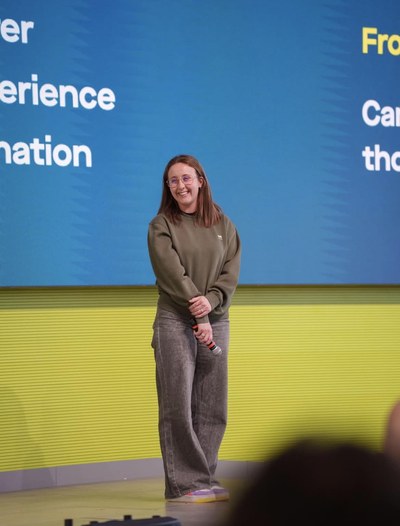
“As an early-stage tech startup, we used Scout to check whether our idea was new. Along the way, we also discovered new competitors and got a clearer picture of which features we should focus on in development.”
of a customer's manual prior-art research, replaced by a search that finishes in under ten minutes.
read in full on every search, chosen from a field of hundreds of thousands.
of the indexed corpus is searched in a language the engine reads - Chinese patents arrive already translated.
Why not a general AI?
Evidence you can open
A general assistant can produce a patent number that reads perfectly and belongs to nothing. Every finding here maps to a real document, quoted word for word.
Official registry access
General assistants do not index full patent databases or their classification trees (CPC/IPC). Scout IP searches a library of 164 million patents from 106 offices, and walks the tree itself.
Structured and repeatable
The same description gives the same analysis, laid out the same way, with every finding traceable to where it came from - the starting point for a conversation with a professional.
Ask a general assistant, and the answer comes back in one of three shapes:
IllustrationCan you perform a comprehensive prior art search for my invention?
A general assistant
I can try, but I may produce plausible-sounding patent numbers or titles that do not exist in any database.
An assistant with web search
I search web sources, but I have no direct access to the official patent registries (USPTO, EPO) or to full CPC classification trees.
An assistant with a long context
I can analyse the text you give me, but I cannot search across millions of filings to find the ones you have not seen.